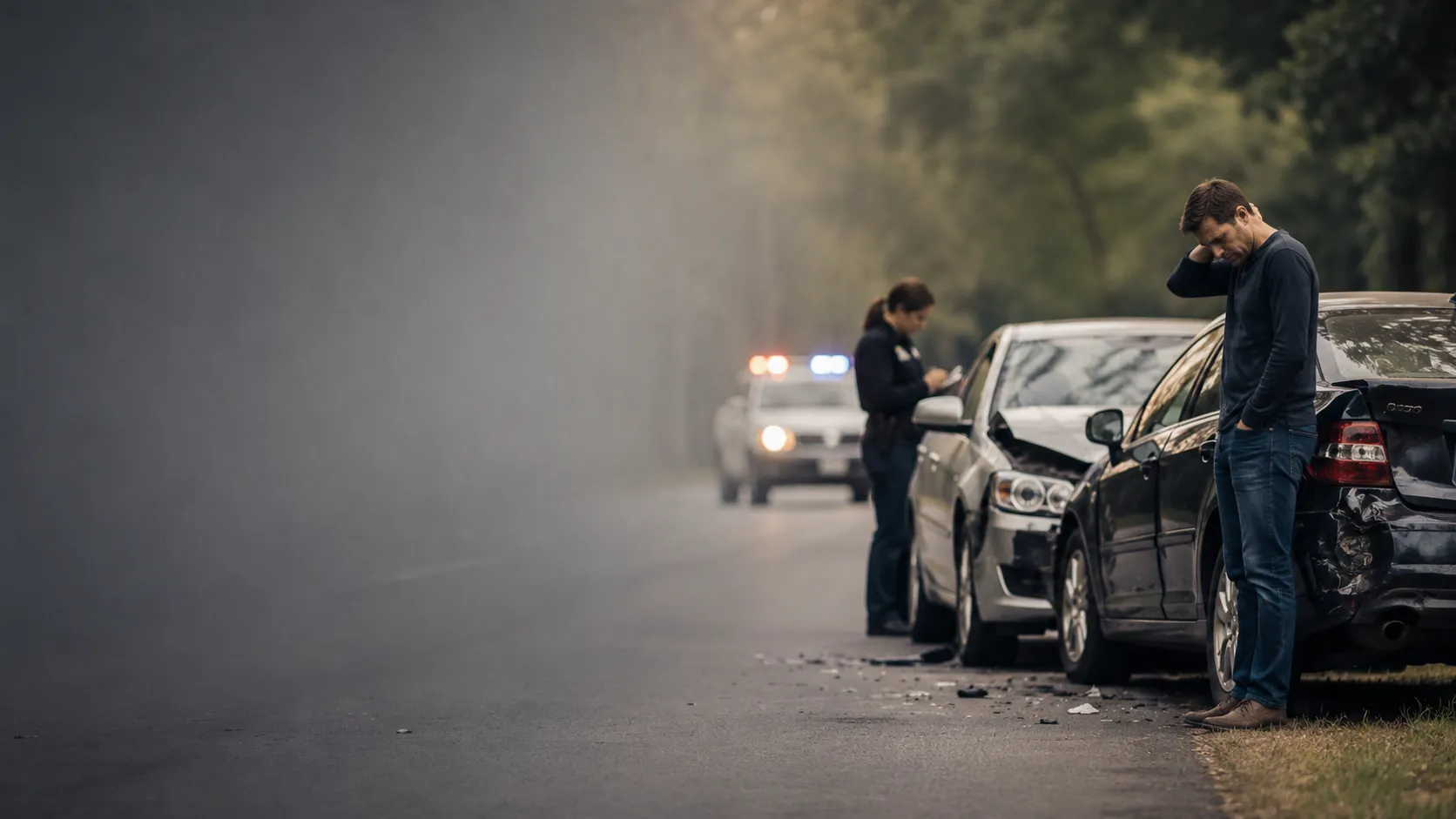
Car accidents in New York happen fast. In just a few seconds, your day flips upside down, and what you do next matters more than most people realize.
Car accidents in New York happen fast. In just a few seconds, your day flips upside down, and what you do next matters more than most people realize. The choices you make right after a crash can protect your health, your finances, and your legal rights. This guide breaks down the exact steps to follow on the spot and explains what we do at every stage, from the roadside to full recovery.
Every day, drivers across New York find themselves caught in sudden crashes. In these moments, actions speak louder than panic. What you do in the first few minutes shapes your recovery, insurance payout, and legal protection. This guide walks you through the steps that protect your safety, build your case, and show what we do from the very beginning.
Stop and stay alert
Bring your vehicle to a full stop, keeping it clear of traffic if possible. Use your hazard lights to stay visible. Place flares, cones, or warning triangles if available.
Check yourself and others
Take a breath. Scan your body for any pain or dizziness. Ask passengers how they feel. If someone struggles to move or seems in distress, avoid moving them until professionals arrive.
Dial 911 immediately
In New York, calling the police is required when someone is hurt, property damage seems significant, or cars are no longer drivable. Share your location clearly and confirm if anyone needs medical help.
Wait for emergency teams
Keep your hazard lights on. Stay calm and wait where it feels safe. Emergency responders will handle injuries and begin the official accident documentation.
Exchange basic information
You must share and collect these details from every driver involved:
Snap pictures of insurance cards and plates for accuracy.
Write down the facts.
Use your phone or a notepad to record:
Your notes help build a strong foundation for your case.
Take photos and videos
Capture wide shots of the crash scene, as well as close-ups of vehicle damage, skid marks, debris, and surroundings. Show traffic signals and street layout.
Record a short video walking around the area. Show the condition of each car, your position on the road, and anything out of the ordinary.
Get witness information
If anyone saw the crash, ask for their name and phone number. Say something simple like, “Can I save your number in case someone needs a statement?” Witnesses help clarify fault.
Stick to facts
When officers ask what happened, stay calm and explain only what you observed. Avoid guessing, apologizing, or assigning blame. Let the evidence speak.
Request the report number
Ask how and when you can get the police report. This document contains details about damage, injuries, vehicle placement, and possible fault. We can help collect it quickly.
Make the call as soon as possible
Share the basic facts of the crash. Keep your explanation neutral. Let them know photos and documents are ready. You can wait to give a fuller account until after you have spoken to us.
Log all conversations
Write down whom you spoke with, the date, and the summary of the conversation. Save confirmation emails and messages in your file.
Visit a doctor right away
Even if you feel fine, pain or injury can appear later. A same-day medical check creates a strong link between your injuries and the accident.
Keep up with treatment
Follow medical advice and attend every appointment. Track your prescriptions, therapy sessions, and all health-related expenses.
Understand how fault works in New York
New York uses pure comparative fault under CPLR 1411. You can still recover even if you share some responsibility, with your recovery reduced by your share of the fault using strong evidence.
Document every type of loss
Compensation includes more than car repairs and medical bills. It covers missed work, therapy, pain, suffering, emotional distress, and reduced quality of life. We calculates everything that matters to your full recovery.
Watch for early settlement traps
Some insurers push for fast payouts to avoid future expenses. These first offers rarely reflect the full value of your injury or hardship. Let us review every offer to see what’s fair.
Let a legal team lead the negotiation
We use medical records, witness accounts, photographs, and expert input to present a complete case, and we deal with the adjusters directly, protecting you from tricks and pressure.
Organize all receipts and files
Set aside a folder that includes:
Prepare for ongoing costs
If you need future treatment or care, we work with your doctors to establish what future care will cost, so that it forms part of the claim rather than being left out of it.
Know your time limits
In New York, most personal injury lawsuits must be started within three years of the date of the injury (CPLR 214(5)). If a city, public authority, or other public entity is involved, the deadlines are much shorter: a written notice of claim is generally due within 90 days of the incident (General Municipal Law 50-e), and the lawsuit must be started within one year and 90 days (General Municipal Law 50-i). Which deadline applies depends on who is responsible, so confirm it early rather than assuming the three-year figure covers your case.
Avoid social media updates
Even casual posts can be twisted by insurance adjusters. A photo of you walking or smiling could make it seem like you aren’t hurt. We recommend staying off social media or keeping your account private.
Include rental and travel expenses
If your car needs repairs or replacement, you may qualify for rental reimbursements or ride-share credits. Save all receipts, mileage, and travel costs. We account for every dollar to your demand.
The legal process after a crash is a lot to take on while you are also being treated for an injury. This is the part we take over.
What We Handle For You:
Car accident work is a large part of what we do, and these are the things clients tell us matter.
You speak directly with the attorney handling your case rather than being passed between people. Calls and emails are returned.
No-fault, the serious injury threshold, and the shorter deadlines that apply when a city vehicle or a government-maintained road is involved all change how a claim has to be handled. We work in these courts and we account for all of it from the first week.
We tell you what is happening, what the next step is, and what each offer is actually worth against what we think the case is worth. The decision on whether to accept is always yours.
We handle car accident matters on a contingency fee, so the fee comes out of a recovery and there is no fee if there is no recovery. The initial consultation is free.
This article is general information about New York law, not legal advice, and reading it does not create an attorney-client relationship. Every case turns on its own facts. For advice about your situation, call (718) 878-1177 or contact us.

If anyone is injured, if there is significant property damage, or if a vehicle cannot be driven away, yes. The police report creates an independent record of the scene, and it is one of the first documents an insurer looks for. Even where a report is not strictly required, having one usually helps.
Names, phone numbers, license plate numbers, insurance details, and a description of each vehicle, from every driver involved. Photograph the documents rather than copying them out, which avoids transcription errors and gives you a timestamped record.
Yes. Photographs and video show what happened far better than a recollection given weeks later. Capture the vehicle damage, the wider scene, road signs and signals, skid marks, and anything unusual about the road surface or the lighting.
Yes. Some injuries, particularly to the neck, back, and head, do not present for hours or days. A same-day examination creates the medical link between the crash and the injury, and without it an insurer will argue that something else caused it.
As soon as you reasonably can, even if you do not yet have every detail. Give the basic facts. You are not obliged to give a recorded statement or a full account on that first call, and it is worth speaking to us before you do.
Yes. New York applies pure comparative fault under CPLR 1411, so being partly responsible reduces your recovery by your share of the fault rather than barring it. Someone found twenty percent at fault can still recover eighty percent of their proven damages. This is state law, not a New York City rule.
Not before someone has looked at it. An early offer usually arrives before the full extent of an injury is known, and it will not account for treatment you have not had yet, time off work still to come, or pain and suffering. Once you accept and sign, the claim is closed.
Because a claim is paid on what is documented. Medical bills, prescription costs, repair invoices, proof of lost income, and travel to appointments all form part of what you recover, and the ones people forget are usually the travel costs and the time taken off work unpaid.
In New York, most personal injury lawsuits must be started within three years of the date of the injury (CPLR 214(5)). If a city, public authority, or other public entity is involved, the deadlines are much shorter: a written notice of claim is generally due within 90 days of the incident (General Municipal Law 50-e), and the lawsuit must be started within one year and 90 days (General Municipal Law 50-i). Which deadline applies depends on who is responsible, so confirm it early rather than assuming the three-year figure covers your case.
We file the no-fault application within its deadline so your treatment is covered, obtain the police report and any available footage, deal with the insurers so you are not giving statements while you are still being treated, work out whether your injuries meet the serious injury threshold, and value the claim including future care. If the offer does not reflect the case, we bring proceedings.
A free consultation is the fastest way to find out where you stand and what your options actually are.