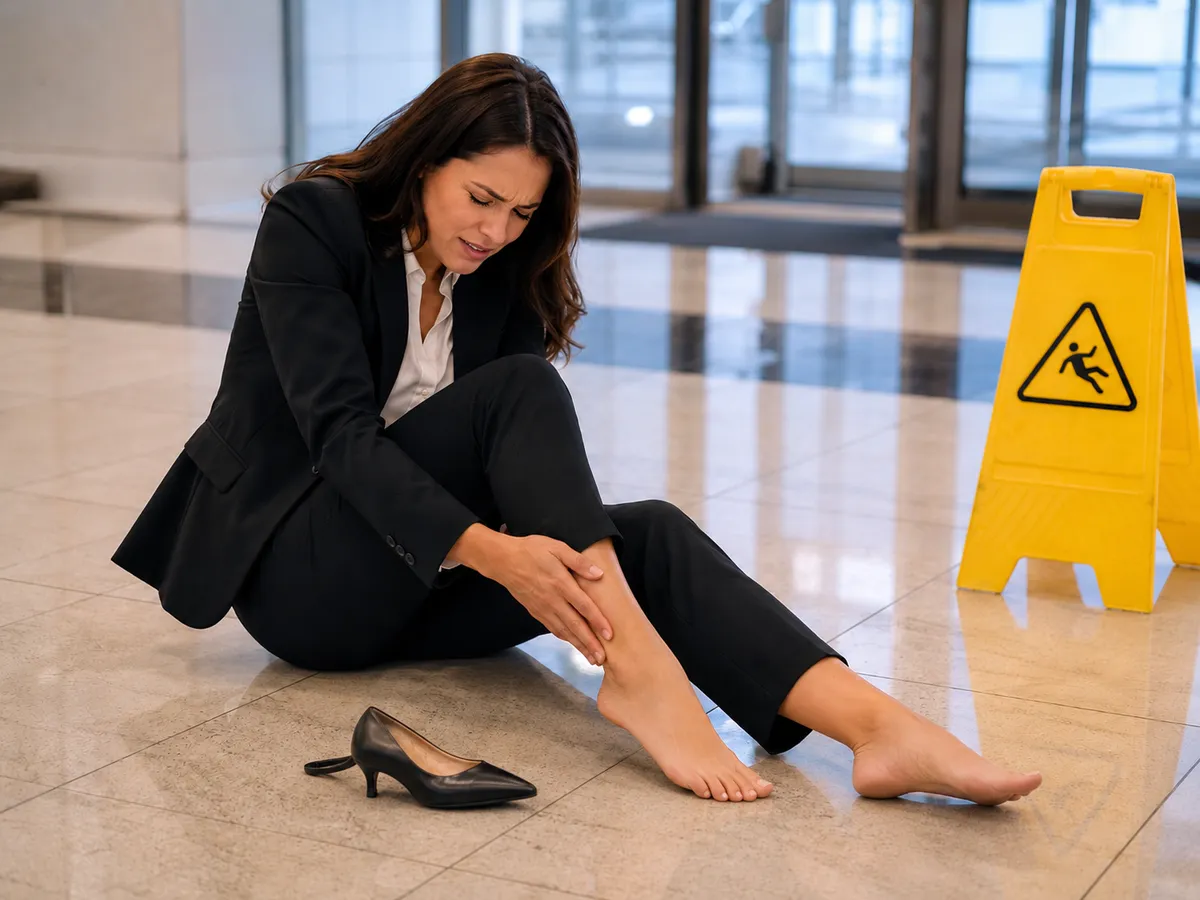
Slip and fall accidents occur all of a sudden. A moment of imbalance on a wet floor, a cracked action, or an icy walkway can trigger injuries that impact life in many ways.

Slip and fall accidents occur all of a sudden. A moment of imbalance on a wet floor, a cracked action, or an icy walkway can trigger injuries that impact life in many ways. New York City law places responsibility on property owners and managers to keep their facilities safe. When these duties go unmet and injuries occur, showing carelessness becomes the course to holding those responsible liable.
We guide you through understanding negligence and how to show it in a slip and fall case. Our experience reveals that collecting the best proof and developing a clear case results in reasonable payment and justice. If you deal with medical expenses, lost income, or discomfort from a slip and fall, this guide discusses how you can prove negligence and how we stand with you every step.
Neglect indicates stopping working to take reasonable care to avoid damage. In slip and fall claims, negligence focuses on the property owner's or supervisor's failure to keep safe conditions or provide caution about dangers.
The law breaks neglect down into four parts:
Responsibility of Care
Homeowners owe a duty to keep visitors safe. This duty requires regular examinations, prompt repair work, and clear warnings about threats.
Breach of Duty
When homeowners or supervisors stop working to meet this task by ignoring threats or postponing repairs, they breach their responsibility.
Causation
A direct connection exists between the breach and your injury. Your fall needs to arise from the hazardous condition that the owner enabled to stay.
Damages
You need to reveal actual damage, such as injuries, medical expenditures, lost earnings, or pain triggered by the accident.
To win a slip-and-fall case, it is essential to prove all four elements clearly. We approach each case with thorough examination and cautious preparation to build a strong claim.
Evidence works as the backbone of any legal case. The more comprehensive and arranged the evidence, the better the opportunity of success. In slip and fall claims, the following types of proof play vital roles:
Visual records of the accident scene show the hazardous condition. Photos of puddles, broken stairs, broken pathways, or poor lighting plainly show hazards. Monitoring cams might catch the fall or a harmful scenario before the accident happens.
Eyewitness accounts help develop the timeline and describe how the accident occurred. Statements from people who saw the fall or knew about the danger add credibility and detail.
Numerous residential or commercial properties require paperwork of repairs and accidents. These reports expose what the homeowner knew and when. Missing or insufficient records frequently show neglect.
Medical paperwork verifies the nature and level of injuries. Connecting treatment to the slip and fall assists in showing damages.
In some cases, experts such as engineers or safety inspectors assess the website and describe why the danger existed and how it triggered the fall.
We gather, preserves, and arranges all available evidence. We also use the proof to counter defense claims and negotiate reasonable settlements or fight in court.
Slip and fall claims can face resistance. Accused may deny responsibility, argue that the danger was unknown, or claim that the hurt celebration is partially at fault.
Some frequent obstacles consist of:
We counter these challenges by focusing on timing, control of the home, and security standards. Showing that residential or commercial property owners had adequate time and opportunity to address the threat but did not act can show negligence plainly.
Slip and fall injuries happen in many locations, but some places have greater risks and legal requirements:
Spills, leakages, or chaotic aisles create hazards that require prompt cleansing and caution indications.
Damaged stairs, irregular floors, poor lighting, or icy entrances present risks that landlords should resolve.
Unsecured cable televisions, damp floors, and mess in hallways increase the threat to staff members and visitors.
Cracks, holes, ice, and snow produce unsafe walking conditions that towns or homeowners might require to keep.
Unequal platforms, escalators, and staircases in subway stations or bus stops present unique security concerns.
Where the fall happened determines which laws and codes apply, so it is the first thing we establish.
Taking the ideal actions instantly after a slip and fall can strengthen your case:
Your health is a concern. Get treatment promptly and follow medical advice.
Take pictures or videos of the danger and your injuries. Record all information about where the accident happened.
Inform home management, shop staff, or structure supervisors about the fall. Request a main incident report.
Request names and contact details of individuals who saw the fall or learn about the dangerous condition.
Keep conversations accurate and prevent taking the blame or apologizing at the scene.
Connect as quickly as possible. Early legal guidance assists in preserving proof and safeguarding your rights.
Our group manages communication with the insurance business, gathers extra proof, and protects your interests from start to finish.
We offer customized, skilled support for slip and fall victims. Here is how we help:
We evaluate your scenario at no cost and explain your rights and choices.
We visit the accident site, take measurements, and collect crucial proof to build your case.
We apply New York facilities liability laws to develop strong arguments in your favor.
Our experience secures you from lowball deals. We work out aggressively for complete settlement.
If necessary, we will defend your rights in court, striving for the very best possible outcome.
You get regular updates and clear descriptions throughout the procedure.
Our mission is to make the legal process easier and win the payment you should have for medical expenditures, lost suffering, pain, and income.
Choosing the ideal legal team changes whatever. We bring experience, dedication, and results. Here is what sets us apart:
Our working knowledge of state and local premises liability law means your case gets the attention it needs.
We listen carefully and treat you like a person, not simply a case number.
Anticipate prompt replies to your calls and emails with sincere updates.
We work on a contingency fee, so the fee comes out of a recovery and there is no fee if there is no recovery.
We win reasonable settlements and decisions that support your recovery and future.
You get a partner committed to standing with you through every action of the legal journey.
This article is general information about New York law, not legal advice, and reading it does not create an attorney-client relationship. Every case turns on its own facts. For advice about your situation, call (718) 878-1177 or contact us.

You need to reveal that the homeowner had a task to keep the place safe, breached that responsibility, and that breach triggered your injuries.
Pictures, videos, witness statements, medical records, event reports, and upkeep logs construct a strong case.
Shared fault does not immediately bar payment in New York. We examine the realities to safeguard your rights.
In New York, most personal injury lawsuits must be started within three years of the date of the injury (CPLR 214(5)). If a city, public authority, or other public entity is involved, the deadlines are much shorter: a written notice of claim is generally due within 90 days of the incident (General Municipal Law 50-e), and the lawsuit must be started within one year and 90 days (General Municipal Law 50-i). Which deadline applies depends on who is responsible, so confirm it early rather than assuming the three-year figure covers your case.
No. We deal with contingency and earn money only if you win.
Yes. Lost earnings due to injury become part of your damages.
We discover other ways to show your case, such as witness accounts and reports.
Numerous cases settle before trial. However, we prepare completely ifthe court becomes necessary.
Yes, if the landlord overlooks maintenance or warnings about hazards.
Contact us promptly to preserve evidence and secure your claim.
A free consultation is the fastest way to find out where you stand and what your options actually are.